What Is CAFM Preventive Maintenance?
Preventive maintenance (PM) or planned maintenance is a scheduled service visit that helps keep your equipment running properly. It is typically performed by trained professionals who know your equipment inside and out, and it is a crucial aspect of building maintenance within the broader context of facility management.
Preventive maintenance is a scheduled service visit that helps keep your equipment running smoothly and prevent small problems from turning into bigger ones. By catching issues early and performing regular maintenance, you can avoid costly repairs and downtime. Routine maintenance, as part of preventive maintenance, involves regularly servicing equipment to prevent unexpected failures and ensure continuous operation. It is also important because it can help extend the life of your equipment.
How Often Should I Do Preventive Maintenance?
The frequency of preventive maintenance depends on the type of equipment and how often it is used. For example, HVAC system that is driven daily will need more frequent maintenance than one that is only driven occasionally. Your facility and maintenance management software can help you create a preventive maintenance schedule, ensuring you perform preventive inspections regularly and don’t forget.
What Are the Benefits of Preventive Maintenance?
There are many advantages to performing preventive maintenance, including:**
Reduced Repair Costs – By catching problems early, you can often avoid more costly repairs down the road.**
Increased Lifespan – Regular maintenance can help extend the life of your equipment and equipment reliability improved**
Reduced Downtime – By keeping your equipment in good working condition, you can avoid unexpected downtime and lost productivity.**
Increased Safety – Regular maintenance can help ensure that your equipment is safe to use.**
Performing fewer unnecessary inspections and maintenance
The number of errors in day-to-day operations is minimized through proactive maintenance strategies
Risks of injury are reduced
CAFM software plays a crucial role in managing preventive maintenance by serving as a central hub for information, enabling efficient operations and data-driven insights.
What Are the Steps of a Preventive Maintenance Schedule?
There are four steps to setting up a preventive maintenance program:
Identify the equipment to be included in the program.
Determine the frequency of service visits.
Create a maintenance schedule.
Implement the software solution.
With a preventive maintenance program (for example Singu FM) in place, a facility manager can oversee the proper care of equipment, ensuring it is less likely to experience unexpected problems. Additionally, automating facility management processes through software solutions can significantly enhance efficiency and effectiveness.
Types of Preventive Maintenance
Preventive maintenance is a crucial aspect of facilities management, involving various tasks to ensure that equipment and assets run efficiently and safely. There are several types of preventive maintenance, and a combination of these types should be scheduled and performed on equipment items. By categorizing and scheduling these tasks, facility managers can ensure that all necessary maintenance is performed in a timely and efficient manner, reducing the risk of unexpected breakdowns and extending the lifespan of equipment.
Mandatory / Non-Mandatory Tasks
Mandatory tasks are those that must be performed as soon as they are due, often including safety-critical checks that cannot be delayed. These tasks are essential for ensuring the safety and reliability of equipment. Non-mandatory tasks, while still important, can be delayed without resulting in a critical failure or significant performance reduction. A well-structured preventive maintenance checklist should clearly differentiate between mandatory and non-mandatory tasks, ensuring that critical tasks are prioritized and completed on time.
Pyramiding / Non-Pyramiding Tasks
Pyramiding tasks occur when maintenance is scheduled but not completed, causing it to overlap with a later scheduled maintenance. In such cases, the new preventive maintenance task cancels the previous one, with a note explaining the cancellation. The new task should include the original due date to monitor how overdue the task is. This approach helps in managing scheduled maintenance more effectively, ensuring that overdue tasks are tracked and addressed promptly.
Inspection and Task Oriented Tasks
Inspection tasks involve conducting checks to identify any issues that need to be addressed. The results of these inspections are then turned into work orders for planned maintenance to fix any discovered problems. On the other hand, task-oriented preventive maintenance allows for minor repairs and adjustments to be made at the time of inspection. This reduces the amount of work that needs to be written up as work orders, streamlining the maintenance process and ensuring that minor issues are addressed immediately.
Preventive Maintenance vs Corrective Maintenance
Preventive maintenance is a proactive approach to maintaining equipment and assets, whereas corrective maintenance is a reactive approach that involves fixing equipment or assets after they have broken down. Understanding the differences between these two approaches is essential for developing effective maintenance strategies.
What is Corrective Maintenance?
Corrective maintenance is performed to identify, isolate, and repair a fault, restoring equipment, a machine, or a system to an operational condition so it can perform its intended function. This type of maintenance is often more costly and time-consuming than preventive maintenance, as it involves fixing equipment or assets after they have broken down. By focusing on preventive maintenance, facility managers can minimize the need for corrective maintenance, reducing costs and downtime, and improving overall efficiency.
By understanding the different types of preventive maintenance and how they compare to corrective maintenance, facility managers can develop effective maintenance strategies that minimize downtime, reduce costs, and improve overall efficiency. Implementing a comprehensive preventive maintenance program is essential for ensuring the long-term reliability and performance of equipment and assets.
Which Industries Benefit from Preventive Maintenance Programs
Preventive maintenance is a key part of any successful business operation. By investing in a planned maintenance software, businesses can avoid costly downtime and repairs. Additionally, preventive maintenance supports business continuity planning by ensuring quick recovery from disruptions, such as fires or major failures. But which industries benefit the most from preventive maintenance app?
Manufacturing and production businesses are among the top beneficiaries of preventive maintenance. By scheduling regular maintenance checks, businesses can ensure that their machines are always operating at peak efficiency. This can help to avoid production delays and disruptions.
Transportation businesses can also benefit from preventive maintenance programs. By keeping vehicles and equipment well-maintained, businesses can reduce the risk of breakdowns and accidents. This can help to keep operations running smoothly and efficiently.
Another industry that can benefit from preventive maintenance is the food and beverage industry. By regularly cleaning and maintaining equipment, businesses can help to reduce the risk of contamination and foodborne illnesses. This is essential for protecting both customers and the reputation of the business.
Overall, any business that relies on machinery or equipment can benefit from a preventive maintenance program. By investing in regular maintenance, businesses can avoid costly downtime and disruptions, making facility management a crucial organizational function that integrates people, place, and processes to enhance productivity and quality of life.

Planned and Preventive Maintenance Program
How to Choose the Best Facility Management Solution?
There are a lot of options out there when it comes to choosing a facility management solution like CMMS for your business. Computer Aided Facility Management (CAFM) should be a key consideration as it enables facility managers to plan, execute, and oversee various operational activities, including maintenance, asset management, and space utilization. It can be overwhelming to try to figure out which one is the best fit for you. Here are a few things to keep in mind when making your decision:
Ongoing maintenance is another crucial feature to look for in a facility management solution. Regular updates and upkeep of software and equipment are essential to ensure effective operation and support preventive maintenance strategies.
1. Make sure the software is customizable.
You want to be able to tailor the software to fit your specific needs. Space planning is a critical component in customizable CAFM software, as it helps optimize asset tracking, maintenance coordination, and occupancy monitoring. There’s no one-size-fits-all solution when it comes to CAFM or CMMS software.
2. Look for a solution that offers preventive maintenance capabilities.
Preventive maintenance is a key part of keeping your equipment running smoothly and supporting the core business by enhancing productivity and quality of life within the organization. Workplace and facilities management is also a key aspect of preventive maintenance, integrating various business functions to optimize physical workplaces and enhance organizational productivity. Make sure the software you choose has this capability.
3. Consider ease of use.
You'll be using the software on a daily basis, so it's important that it's user-friendly. Look for a solution that is intuitive and easy to use.
4. Get a demo of the software.
It's always a good idea to see the software in action before you make a purchase. Most reputable companies offer free demos.
5. Pick experienced vendors.
Make sure you work with vendors who are experienced in the industry type you operate in. Equally important is the support offered and the implementation team that will help you deploy the solution into your organization.
What Is the Best Software For Preventive Maintenance Management?
The best software for preventive maintenance management is often a CAFM (Computer-Aided Facility Management) system that suits your needs. The planned maintenance management software should have a comprehensive feature set, which includes:
Easy creating****inspection and maintenance****schedules for facilities
Mobile****app to work in the field, even without the Internet connection
Flexible preventive maintenance checklists
Visualization of maintenance inspections for instant access to all maintenance plans
Digital****signatures of performed inspections
Advanced reporting features and online****protocols
We can help you find the right solution to suit your business and budget and streamline preventive management.
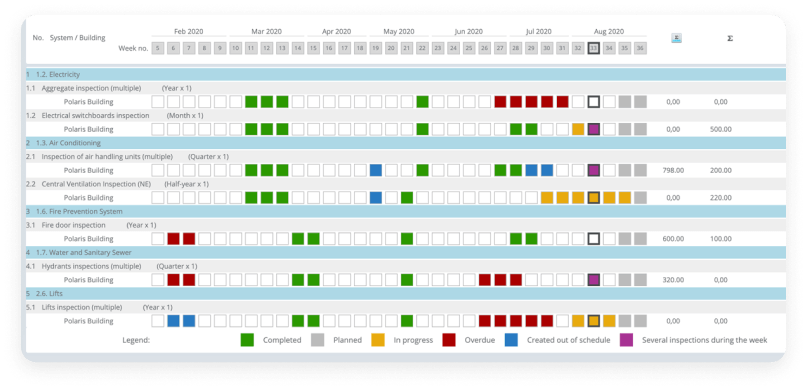
Preventive Maintenance Visualization
To Sum Up
Preventive maintenance (PM) is scheduled maintenance or servicing of equipment to prevent unexpected failures or deterioration. Preventive maintenance is a proactive approach to equipment maintenance that seeks to avoid or prevent potential equipment problems. Equipment is serviced or inspected on a regular basis to identify and correct any problems before they result in equipment failure or downtime. Planned maintenance system software is used to manage and automate preventive maintenance tasks.
If you are looking to implement a preventive maintenance strategy, then consider using building preventive maintenance solution like Singu FM to help you manage and automate your maintenance tasks. Feel free to get in touch with us today and get a free demo. We'd be more than happy to explain how Singu FM works.