
Commercial property management software helps property owners, asset managers and property managers run office buildings, retail properties and industrial properties from one system. It typically covers maintenance requests, inspections, compliance, tenant communication and reporting, as well as leases, rent and service charges. Instead of tracking tenant requests, contractor jobs and building records across spreadsheets and email, property teams keep everything in one place and can access it on the go.
Commercial portfolios are often spread across many buildings and sites, each with its own contractors, inspections and compliance checks. Tenants expect quick responses to their requests, and property owners expect clear reporting on how each site performs. This guide explains what commercial property management software does, compares 10 of the best commercial property software tools in the UK and shows how to choose the right one for your portfolio.
Key Takeaways
- Commercial property management software brings maintenance, inspections, compliance, tenant requests and reporting into one system for property owners, asset managers and property managers.
- For portfolios spread across many buildings and sites, it helps property teams keep work consistent, manage contractors and show owners how each site performs.
- Some tools focus on building operations, while others focus on leases, service charges and accounting. Many commercial property teams use both and connect them through integrations.
- Pricing for commercial real estate property management software is almost always quote-based and depends on portfolio size, number of users and modules.
- The best commercial property management software in the UK for 2027 includes SINGU for commercial and multi-site property operations, as well as MRI Software, Yardi Breeze Premier and Re-Leased for leases and finance.
What Is Commercial Property Management Software?
Commercial property management software is a platform that helps property owners and property managers run commercial buildings, tenants and day-to-day operations in one system. Maintenance requests, inspections, certificates and key documents are recorded in one place, and the software sends reminders before inspections, certificate renewals or lease expiries are due. Built-in document management keeps certificates, contracts and lease information easy to find.
Commercial property brings its own operational demands. Office buildings, shopping centres, retail spaces and logistics parks have shared areas and building systems that need planned maintenance, inspections and compliance checks. Many tenants often share one building, and larger portfolios are spread across many sites and contractors. Commercial property management software is built around these needs.
What the software covers depends on its focus. Operational platforms handle maintenance, contractors, inspections, compliance and tenant communication across many sites. Lease and finance platforms handle lease administration, rent collection, credit control, service charges and property accounting. Some enterprise systems cover both, but most commercial teams use more than one tool.
How Does Commercial Property Management Software Work?
Most tools are built around a central record of properties, units, tenants and leases, with every document, cost and task linked to it. The software then helps property management teams automate repetitive tasks, such as sending rent demands, chasing arrears, reconciling service charges at year end and passing maintenance requests to contractors. Dashboards bring financial data and operational data together, so asset managers and property owners can track occupancy, costs and asset performance.
The Best Commercial Property Management Software in the UK (2027)
We compared the tools below by the type of commercial portfolio they suit, their main features, UK presence and pricing. Some focus on leases, service charges and accounting, while others focus on building operations and tenant experience. Many commercial property teams use one of each.
| Tool | Best for | Key strength | Limitation | Pricing |
| SINGU | Commercial and multi-site property operations | Maintenance, inspections and compliance across many sites | No lease administration or accounting | Quote-based |
| MRI Software | Enterprise commercial real estate portfolios | Leases, accounting and operations in one platform | Built for larger organisations | Quote-based |
| Yardi Breeze Premier | Small and mid-sized commercial portfolios | Service charges and accounting in one cloud system | Designed for small and medium-sized businesses | Quote-based |
| Re-Leased | Commercial leases and service charges | Service charge budgets and two-way accounting integrations | Relies on separate accounting software | Quote-based |
| Planon | Large organisations combining lease and facilities management | Lease accounting, maintenance and space in one system | Implementation charged separately | Annual subscription per named user |
| Trace Solutions | Service charges for managing agents and investors | Specialist UK products with 200+ standard reports | Separate products for each sector | Quote-based |
| Propman | Commercial managing agents | Client and service charge accounting in one system | Built mainly for managing agents | Quote-based |
| SAP RE-FX | Large organisations already using SAP | Leases and service charge settlement inside SAP | Requires SAP Financial Accounting and Controlling | Quote-based |
| Equiem | Tenant experience in flagship office buildings | Tenant engagement, flex space and operations | No lease administration or accounting | Quote-based |
| Vantify CAFM | Maintenance and compliance with expert risk services | Planned and reactive maintenance with a 24/7 service desk | Focused on facilities management | Quote-based |
SINGU (Best for Commercial and Multi-Site Property Operations)
SINGU is a property operations platform for commercial and multi-site portfolios, such as office buildings, shopping centres, retail chains and logistics parks. It gives property managers, asset managers and property owners one place to handle tenant requests, maintenance, inspections, compliance and reporting across every site.
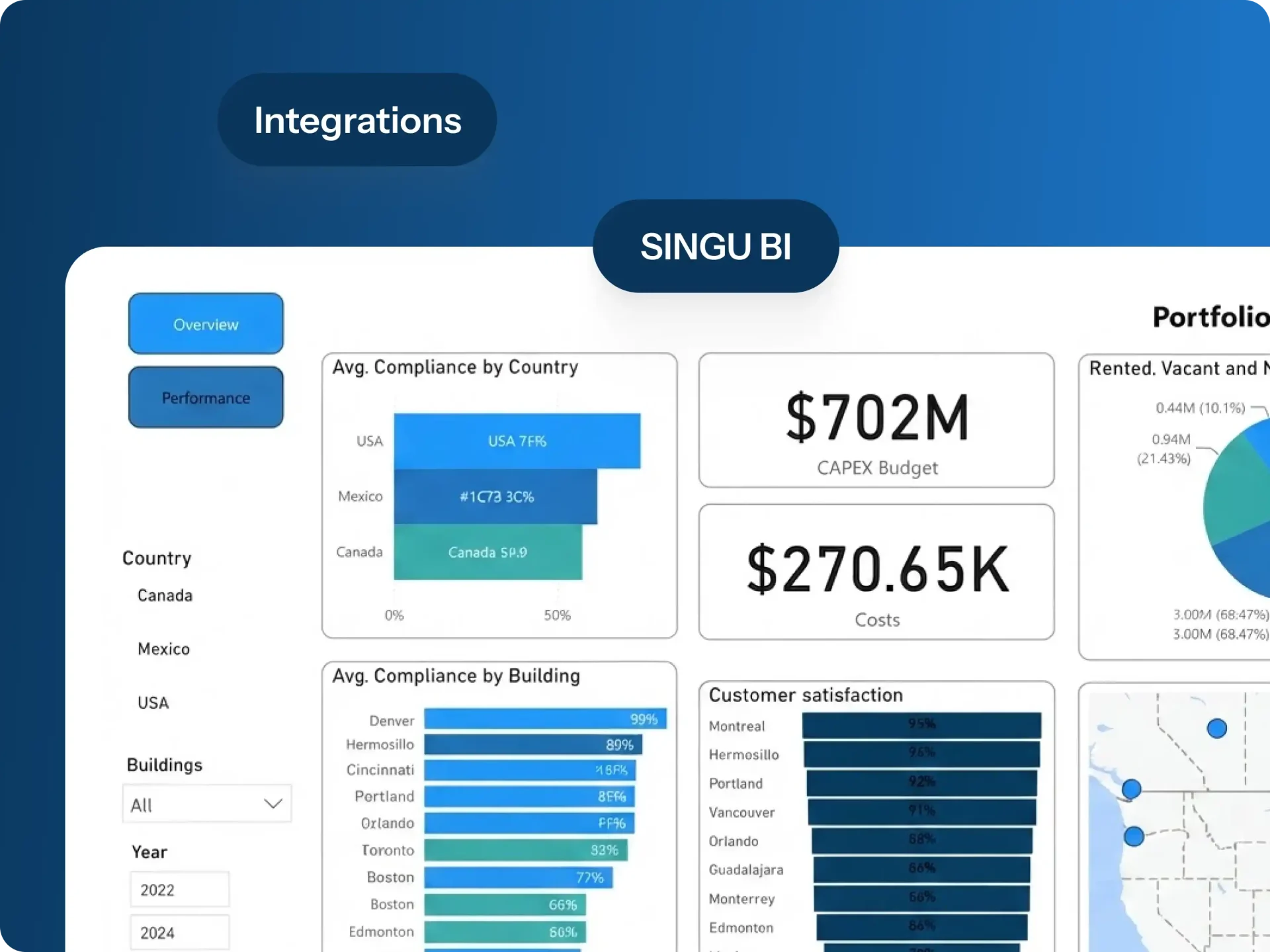
SINGU brings tenant requests, maintenance and inspections into one platform. When a tenant flags a problem, property managers can turn it into a job, assign it to the right contractor and follow it until it is closed. Planned maintenance runs on a schedule, and site teams complete inspections on mobile, so each certificate and inspection result has a clear audit trail. Owners and asset managers get reports that bring operational, energy and ESG data together, so they can compare how sites perform across the portfolio.
Maintenance cost data can be passed to finance systems such as Microsoft Dynamics 365 Business Central. NEPI Rockcastle uses SINGU across 50 buildings in eight countries, as described in the case study below.
Pricing. Quote-based. Each proposal covers software, implementation and support, based on the capabilities needed across the portfolio. Details are on the SINGU pricing page.
Pros. Maintenance, compliance and tenant requests in one platform, built for portfolios with many sites.
Cons. Doesn’t cover lease administration or accounting, so it works alongside a lease and finance system.
Managing maintenance and compliance across many sites? Run it all from one platform.
See how SINGU brings tenant requests, contractor jobs and inspections together, with clear reporting for every site.
MRI Software
MRI Software is a commercial real estate platform used by owners, investors, managing agents and occupiers across office, retail, industrial and logistics property in the UK. MRI says 70% of the top UK investors use its solutions.
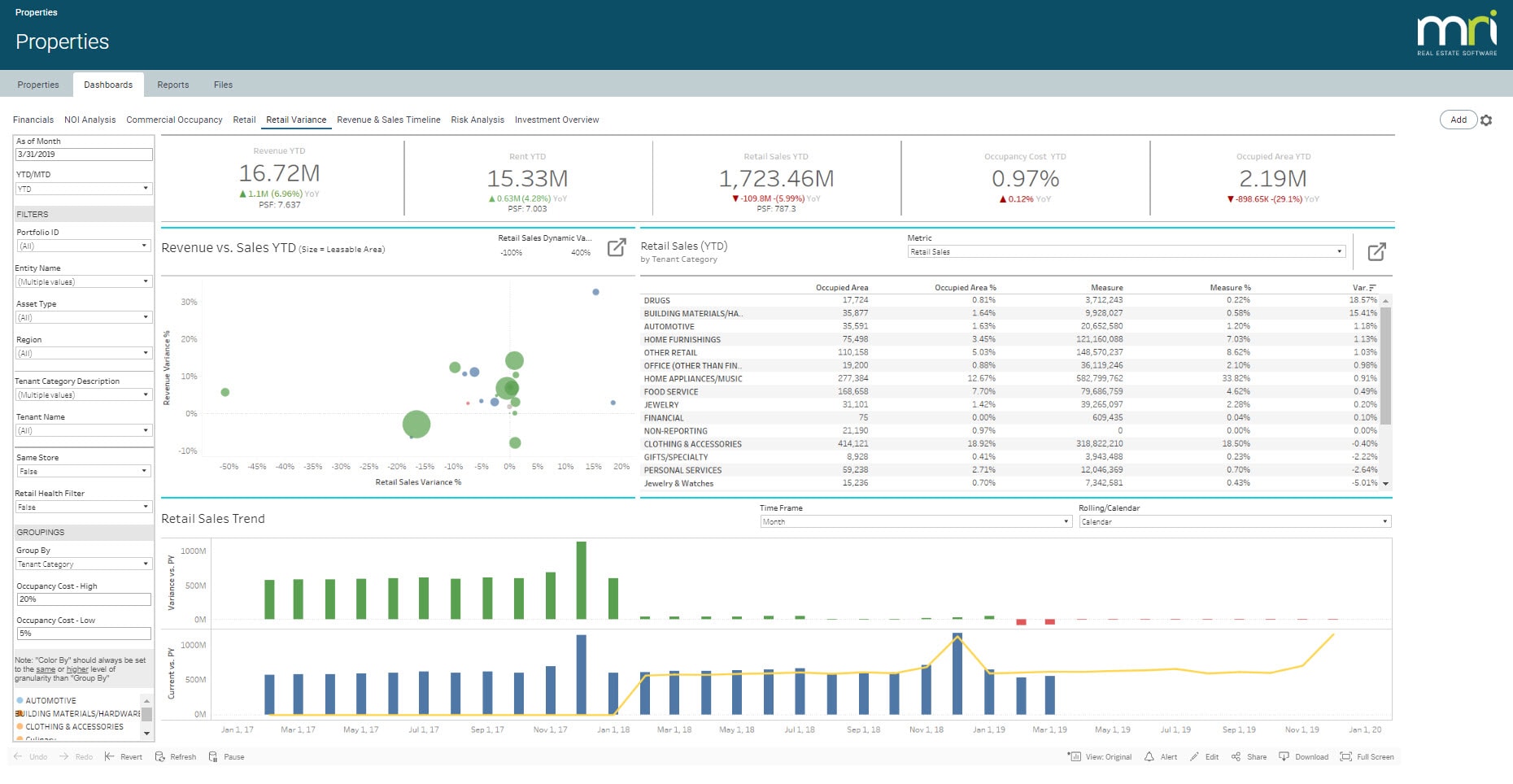
MRI brings property management and accounting together for rent, recoveries and reporting. Its lease management centralises lease data, sends alerts and manages renewals, break clauses and rent reviews, and MRI states that its software complies with IFRS 16. Facilities management, energy management and AI-powered lease abstraction, which turns lease documents into structured data, complete the platform.
Pricing. Quote-based, with demos available on request.
Pros. Leases, accounting and operations in one platform at enterprise scale.
Cons. Built for larger organisations, so smaller portfolios may not need its full scope.
Yardi Breeze Premier
Yardi Breeze Premier is a cloud-based property management and accounting platform designed for small and medium-sized landlords and property agencies. Yardi launched it in the UK in 2021 for both commercial and residential property.
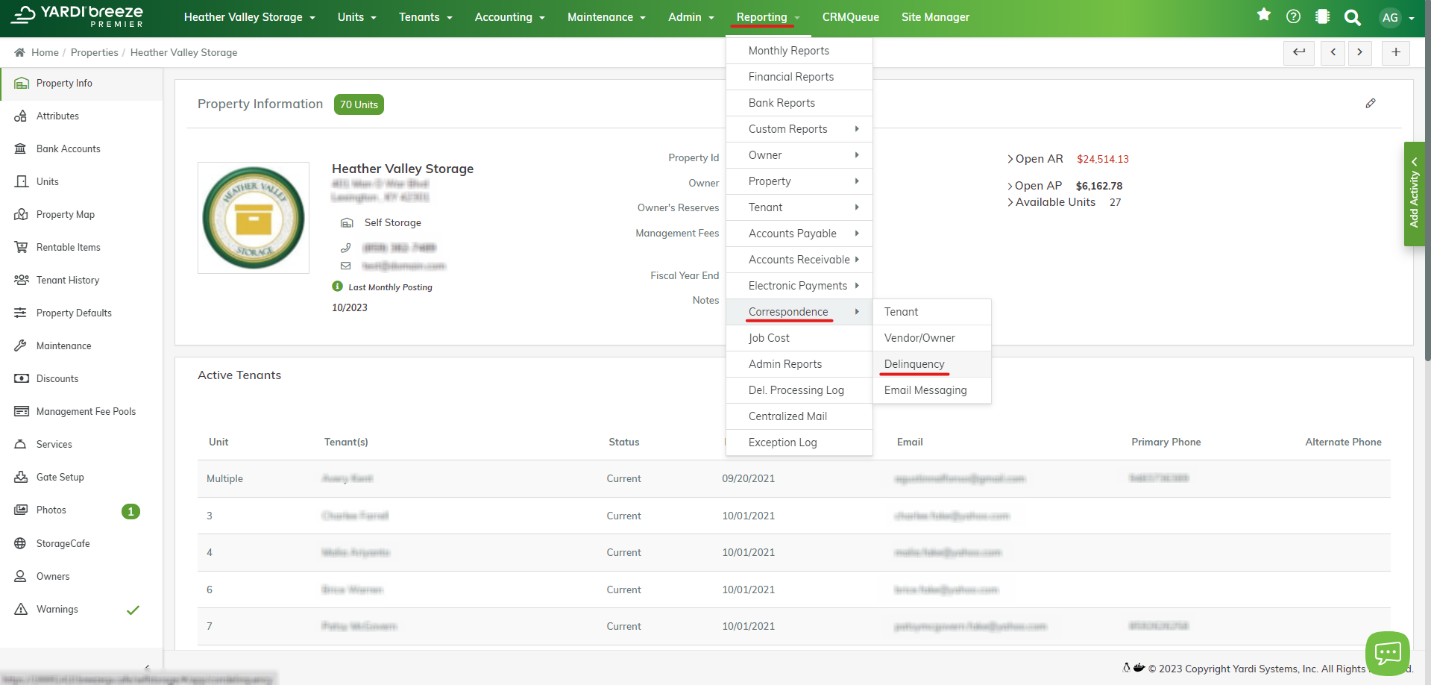
Breeze Premier covers lettings, property management, property and corporate accounting, service charge management and turnover rent calculations. Yardi states that its service charge tools follow RICS guidelines. Maintenance and inspections, a landlord portal and property and financial reporting are included, and add-ons such as RENTCafé bring online payments and e-signatures.
Pricing. Quote-based, with demos available on request.
Pros. Service charges, accounting and maintenance in one system for smaller teams.
Cons. Designed for small and medium-sized businesses, so large portfolios may need a more advanced platform.
Re-Leased
Re-Leased is cloud-based property management software for landlords and property managers who own or operate commercial, industrial, retail and mixed-use portfolios in the UK. It supports more than 375,000 leases.
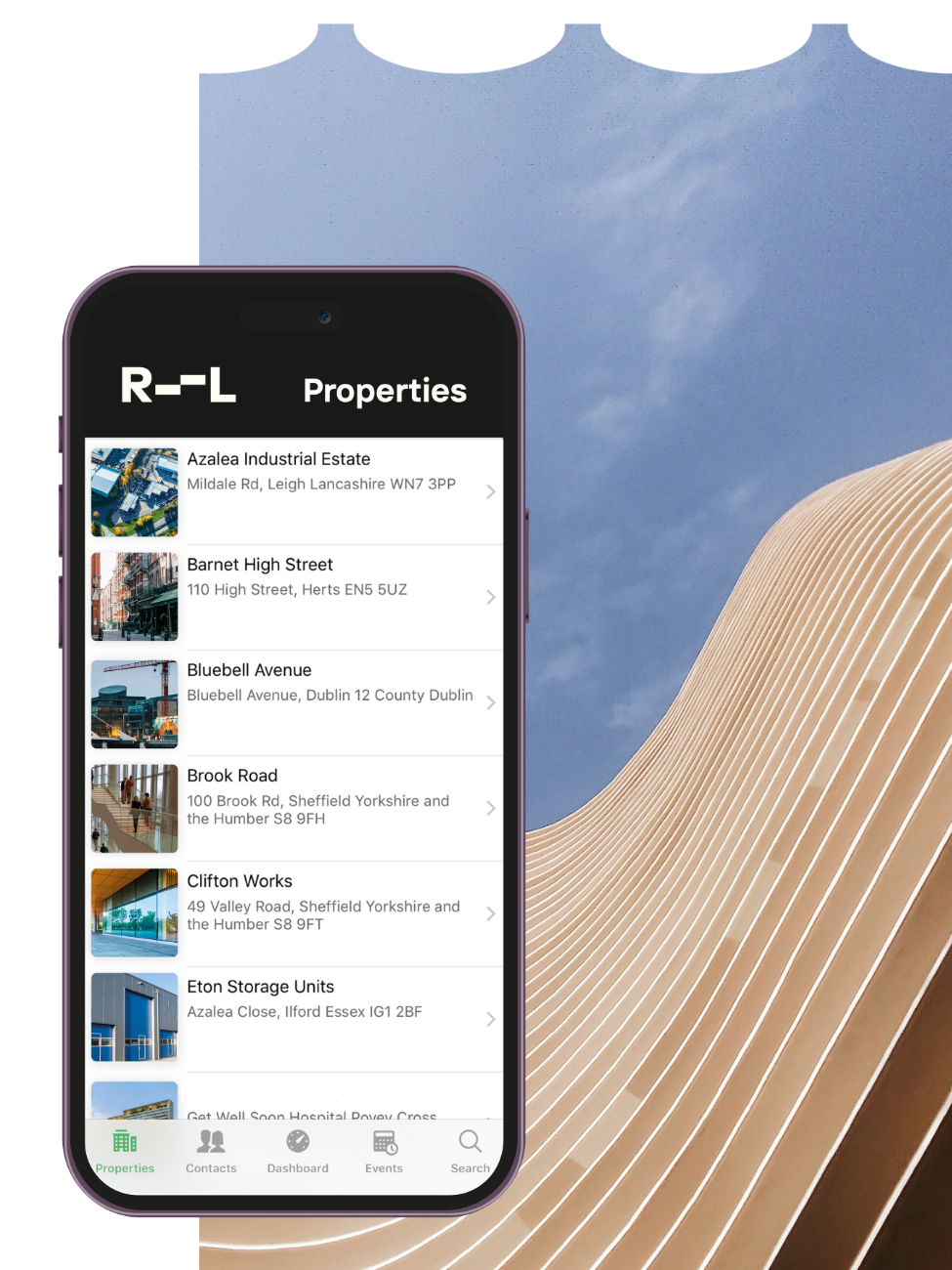
Re-Leased gives a full view of properties, leases and tenants, with automated reminders for rent reviews, renewals and other lease events. Arrears are chased with automated messages, and tenants can pay online through Re-Leased Pay. Its service charge tools set budgets, apportion costs across tenants by floor area, pro rata or custom splits, and handle year-end reconciliation. Built-in reporting helps teams keep track of portfolio performance. Two-way integrations connect it with Xero, Sage Intacct, QuickBooks Online and NetSuite, and its Credia AI tools extract lease data and answer questions about lease documents.
Pricing. Quote-based.
Pros. Built specifically for commercial leases and service charges.
Cons. Relies on separate accounting software such as Xero or NetSuite.
Planon
Planon is an integrated workplace management system (IWMS) used by more than 3,250 clients. Its Accelerator platform covers real estate, space and workplace, asset and maintenance, and energy and sustainability.

For real estate teams, Planon offers portfolio and lease administration with IFRS 16 lease accounting. The same platform handles maintenance, facilities management, space management and energy data, so lease and building information sit together. It suits organisations that want to manage property and facilities in one system.
Pricing. Annual SaaS subscription based on the number of named users, with professional services charged separately.
Pros. Lease accounting and facilities management in one system.
Cons. A broad enterprise platform, with implementation charged separately.
Trace Solutions
Trace Solutions is a UK provider of property management software with separate products for different sectors. TRAMPS is built for commercial managing agents and block managers, BlueBox for property owners and investors, and o6ix for corporate occupiers.
TRAMPS handles service charge reconciliations and keeps property transactions and data in one place. Trace says BlueBox is used by three of the UK’s top five property investors, and its products include more than 200 standard reports. Managing agents using TRAMPS include Cushman & Wakefield, CBRE and Carter Jonas.
Pricing. Quote-based.
Pros. Strong service charge and reporting tools built for the UK market.
Cons. Separate products for each sector, so teams need to choose the right one.
Propman
Propman by Grosvenor Systems is property management and accounting software for commercial managing agents. It is also used by block managers, property owners and occupiers, and more than 200 businesses use it.
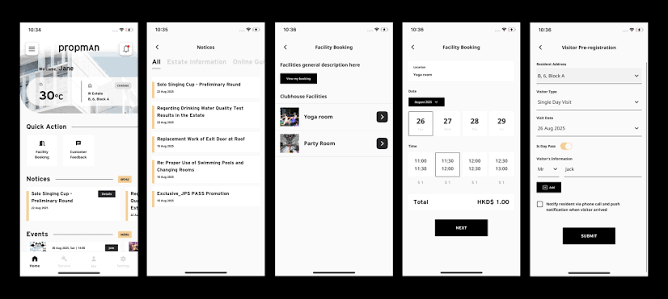
Propman keeps client, service charge and operational accounts in one system, with automatic balancing charges, arrears monitoring, VAT processing and bank reconciliation. It sends reminders for lease expiries, reviews and breaks, and its report writer creates custom reports for each client. Maintenance requests and contractor jobs are tracked from instruction to completion, with an audit trail and cost monitoring.
Pricing. Quote-based.
Pros. Client and service charge accounting built for managing agents.
Cons. Built mainly for managing agents, so owner-operators may not need all of its client accounting.
SAP RE-FX
SAP Flexible Real Estate Management (RE-FX) is the real estate component of SAP. It runs on SAP Financial Accounting and Controlling, so it suits organisations that already use SAP for finance.

RE-FX manages land, buildings, rental units and spaces, along with lease-in and lease-out contracts for commercial, internal and residential use. Its service charge settlement splits shared costs such as maintenance, utilities and heating between tenants by fixed amounts, consumption or agreed percentages, and posts each share to the tenant’s account.
Pricing. Quote-based.
Pros. Leases and service charges managed inside existing SAP finance processes.
Cons. Requires SAP Financial Accounting and Controlling.
Equiem
Equiem is a tenant experience and property operations platform for commercial real estate owners and operators. More than 800 buildings in over 25 countries run on it, and its clients include Canary Wharf Group and M&G Real Estate.
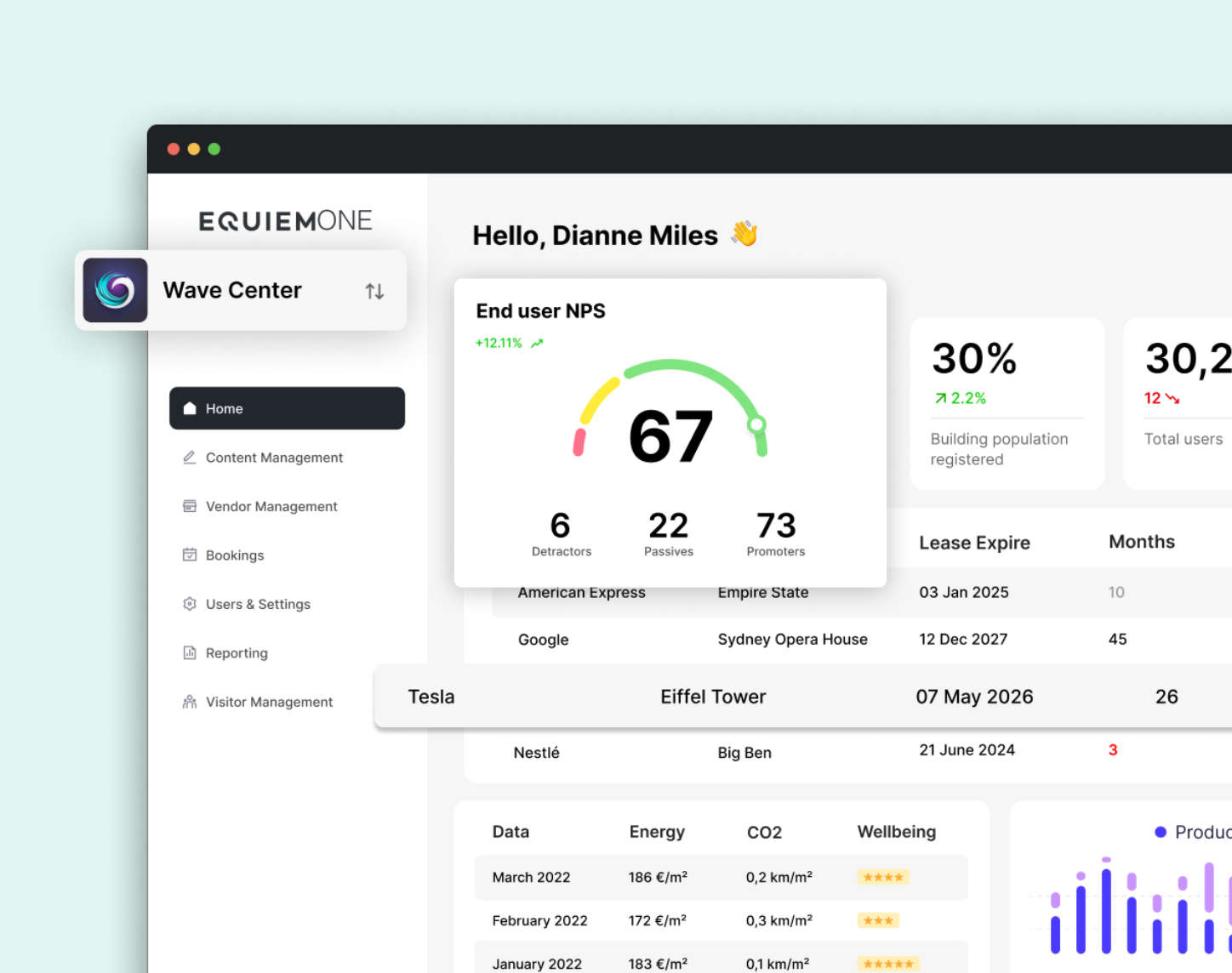
The Equiem One platform is built from modules. Engage provides content, events and building information for tenants, Ops gives property teams tools to streamline their workflows, Flex manages flexible space, and Data offers portfolio-level dashboards. In 2021, Equiem acquired Vicinitee, British Land’s property management platform, which added work order, contractor and visitor management.
Pricing. Quote-based.
Pros. Tenant engagement and building operations in one platform.
Cons. Focused on tenant experience, so leases and accounting need a separate system.
Vantify CAFM
Vantify CAFM, previously Elogs, is facilities management software that manages more than 20,000 properties across 30 countries. It is part of Vantify, a UK compliance group launched in 2025.
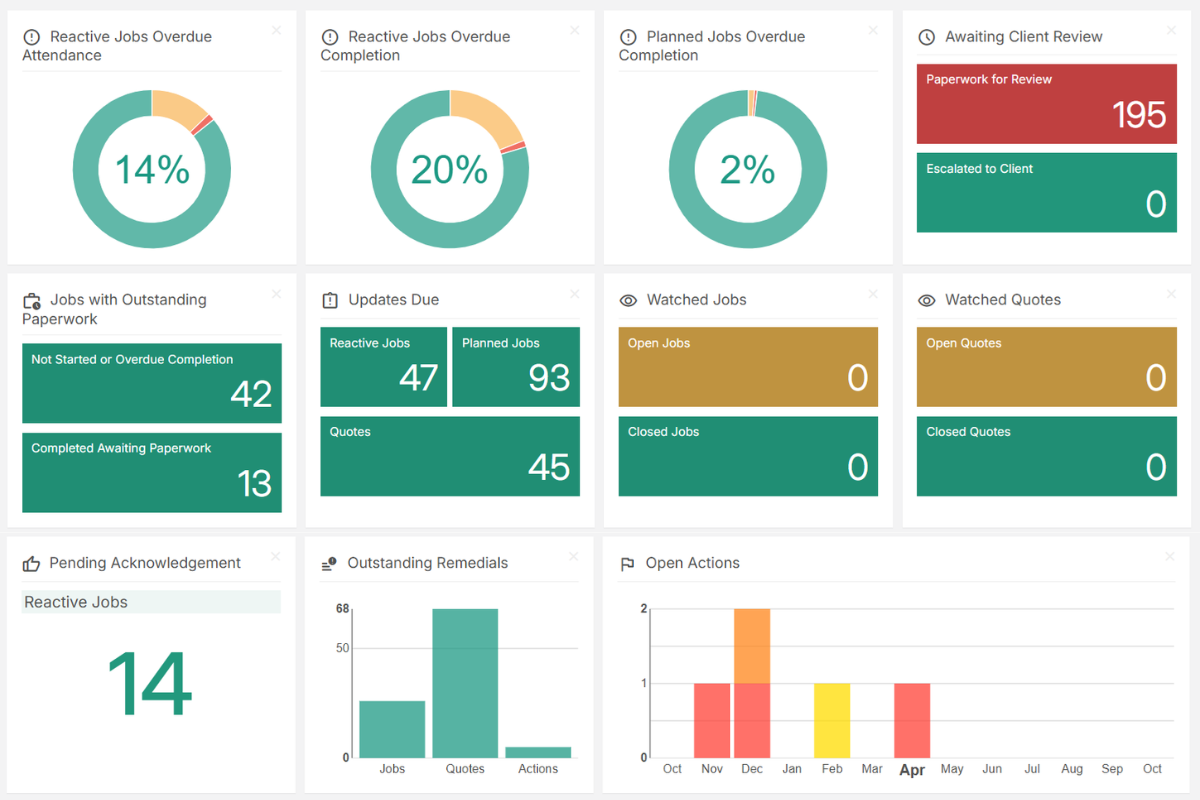
Vantify CAFM handles reactive jobs and quotes, planned preventative maintenance and supplier performance monitoring, backed by a 24/7 service desk. It connects with Vantify Risk Manager, and Vantify also offers consultancy in health and safety, fire safety, Legionella and asbestos.
Pricing. Quote-based.
Pros. Maintenance software combined with expert compliance services.
Cons. Focused on facilities management, so leases and accounting need a separate system.
Key Features of Commercial Property Management Software
The features that matter most depend on how a portfolio is managed and which tasks take up most of the team’s time. The sections below start with day-to-day building operations and finish with leases and finance. Most tools help streamline operations in these areas, but each covers them in a different depth.
Maintenance and Building Operations
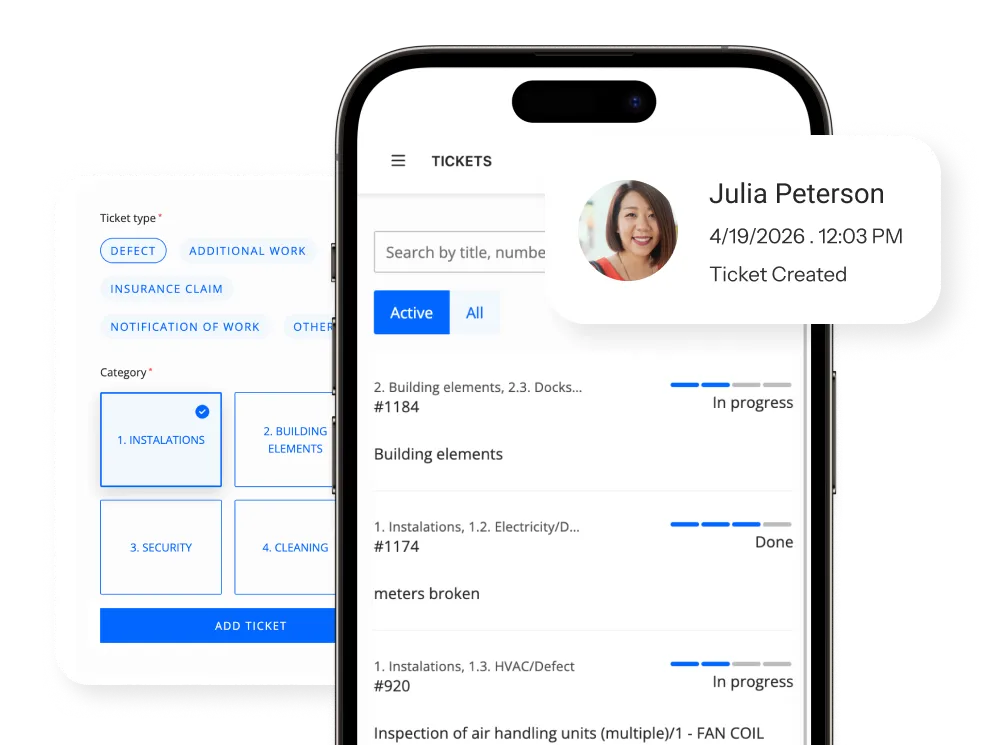
Maintenance management covers reactive repairs, planned maintenance, service requests and the contractors who carry them out. Facilities management tools log maintenance requests, assign maintenance tasks to the right team or contractor and keep the maintenance history of each building and asset. Task management features show what is open, overdue or complete, which helps simplify operations when managing maintenance requests across many sites. In larger portfolios, the same data makes it easier to compare costs and contractor performance between locations, which improves operational efficiency. SINGU covers work orders, preventive maintenance, equipment and inventory management, and vendor management for contractors.

Compliance and Inspections
Commercial property managers are responsible for regular checks and certificates with fixed renewal dates, such as fire risk assessments, Legionella risk assessments, electrical installation condition reports (EICRs), asbestos management and EPCs. Software keeps these records in one place and sends reminders before they expire. In SINGU, site teams carry out mobile inspections with customisable checklists, photos and asset tagging, and every certificate and inspection is stored with a full audit trail, which makes compliance easier to track across a portfolio.

Tenant Communication
Tenants expect a simple way to report issues and clear updates on what happens next. Tenant management features keep tenant contacts, requests and documents in one place. A tenant portal or app lets them submit maintenance requests, receive building information and access documents without chasing the property team by email. Good communication improves tenant satisfaction, which supports renewals and reduces voids. In SINGU, tenants can report building issues and receive building updates, and property managers can collect tenant feedback to improve their services.
Portfolio Reporting
Property owners and asset managers expect regular reports on asset performance across their commercial assets, which supports asset management decisions throughout the property lifecycle. Financial reports usually cover rent roll, arrears, occupancy and net operating income. Operational reports cover response times to tenant requests, SLA compliance, maintenance cost per site and planned maintenance completion. SINGU focuses on operational reporting, with customisable dashboards, ESG reporting and utility data collection.

Leases, Rent and Service Charges
Lease and finance features keep lease information in one place and send alerts before rent reviews, break dates and lease expiries, which helps avoid missed rent reviews. Automated rent demands and arrears reminders also help property teams collect rent on time. They also cover complex lease calculations such as turnover rent, credit control, service charge budgets and year-end reconciliation, and owner statements. Most connect with an accounting system or include their own accounting tools for back office operations. These tools are usually provided by dedicated lease and finance platforms, such as those in the ranking above. Operational platforms such as SINGU don’t handle leases or accounting, but can pass maintenance cost data to finance systems such as Microsoft Dynamics 365 Business Central.
Commercial vs Residential Property Management Software
Residential property management software is built for private landlords and letting agents. It focuses on tenancies, rent, deposits, tax records and safety certificates for homes, and many tools offer free or low-cost plans for small portfolios.
Commercial property management software is built for real estate professionals such as property owners, asset managers and managing agents who look after office buildings, retail properties, industrial properties and mixed-use estates. Buildings are larger, tenants share common areas and building systems, and maintenance and compliance are spread across many sites and contractors. Leases also run for longer, and shared costs are recovered through service charges. Pricing is usually quote-based and depends on portfolio size and modules.
Some enterprise platforms cover both residential and commercial properties, but most tools are built for one or the other. Mixed portfolios often use a residential lettings tool alongside a commercial platform.
How to Choose Commercial Property Management Software
Choosing the right software starts with your portfolio and the work your team does every day, rather than a feature list.
- The type and size of your portfolio. Consider how many buildings, leases and tenants you manage, and whether your properties are offices, retail, industrial or mixed-use. Complex portfolios with many sites and lease types need more configurable software.
- Leases, finance or operations. Decide whether your main need is lease administration, service charges and accounting, or maintenance, compliance and tenant requests across many sites. Many teams need one tool for each.
- Integrations with your current systems. Check whether the software connects with your accounting solution or ERP system, so lease, cost and service charge data doesn’t need to be entered twice.
- Ease of use for everyone involved. Property managers, site teams, contractors and tenants should all be able to use it easily, including on mobile.
- Security and scalability. Check how the vendor protects tenant and property data, for example through ISO 27001 certification, and whether the software can support a growing portfolio without adding admin work for your team.
- Implementation and support. Ask how long rollout takes across your portfolio without disrupting business operations, what training is included and how support works after go-live.
- Total cost. Look beyond the subscription at implementation, training, integrations and how the cost grows with your portfolio.
Case Study: NEPI Rockcastle
NEPI Rockcastle is a leading owner and operator of shopping centres in Central and Eastern Europe. It uses SINGU across 50 buildings and 2.4 million m² in eight countries.
The Challenge
Each site worked on its own, with status updates shared by phone, email and WhatsApp. Service reports were spread across mailboxes and shared drives, and there was no consolidated history of assets as vendors changed. This made it hard to monitor response times and SLAs or compare locations. Every country also had its own legislation, standards and language, and most sites had several service providers using their own tools.
"Our objective was simple: one platform for all core services, with user-friendly access to the data we need every day."
Przemysław Wasiluk, former Regional Property Manager, NEPI Rockcastle
The Solution
SINGU was rolled out step by step with a dedicated joint team. A pilot at Bonarka City Center in Poland shaped the group blueprint, followed by five more sites in other countries and then the full portfolio. The platform now covers reactive and planned maintenance, security rounds and cleaning. A central helpdesk logs and routes every request with SLA tracking, inspections lead directly to corrective tickets, and BI dashboards show activity by country, site, provider and service line.
The Results
- One platform across 8 countries. Maintenance, security rounds and cleaning for 50 buildings now run from a single, auditable system instead of inboxes and spreadsheets.
- From 1–2% to 69–79% planned maintenance tracking. After focused training and support, several Romanian sites saw planned maintenance execution and tracking rise from around 1–2% to 69–79%.
- Portfolio-wide visibility. The group can review activity, SLAs and backlog for every country, site and provider in one view, and contracts now require service providers to use SINGU.
Read the full NEPI Rockcastle customer story.

Commercial Property Management Software FAQs
What Does Commercial Property Management Software Do?
Commercial property management software helps property owners, asset managers and property managers run commercial buildings from one system. Depending on the tool, it covers leases, rent collection, service charges, accounting, maintenance, compliance, tenant communication and portfolio reporting.
What Is the Best Commercial Property Management Software in the UK?
It depends on your portfolio and what you need the software to do. MRI Software suits enterprise portfolios, Yardi Breeze Premier suits small and mid-sized portfolios, Re-Leased focuses on commercial leases and service charges, and Trace Solutions and Propman are built for managing agents. SINGU is the best fit for the operations of commercial and multi-site portfolios, from maintenance and inspections to compliance and tenant requests.
Can One System Manage Both Leases and Building Operations?
Some enterprise platforms, such as MRI Software and Planon, cover both leases and facilities management. Many commercial property teams still combine a lease and finance system with a dedicated operational platform and connect the two, so each part of the work is handled by a specialist tool.
How Does Software Help With Service Charges?
Software helps property managers set service charge budgets, apportion costs between tenants and reconcile actual spending at year end. Keeping maintenance and contractor costs in one system also makes it easier to show tenants what they are paying for.
Does Commercial Property Management Software Support IFRS 16?
IFRS 16 mainly affects how occupiers account for the leases they hold. Some platforms, such as MRI Software and Planon, state that they support IFRS 16 lease accounting, so it is worth checking this with vendors if your organisation reports under IFRS.
What Is the Difference Between Property Management and Facility Management Software?
Property management software focuses on leases, tenants and finance, while facility management software focuses on buildings, maintenance and technical compliance. In commercial portfolios, the two often work together. Our guide to CAFM systems explains the facility management side in more detail.
How Much Does Commercial Property Management Software Cost?
Most commercial property management software is priced on a quote basis. The cost usually depends on portfolio size, the number of users or leases, the modules you choose and the implementation work needed.
How Long Does It Take to Implement Commercial Property Management Software?
Implementation usually takes several weeks or more, as property data, users and workflows are configured. Larger portfolios are often rolled out step by step, starting with a pilot site before moving to the rest of the portfolio.
Conclusion
Commercial property management software brings maintenance, compliance, tenant requests, reporting and leases into one place, but no single tool does everything equally well. Lease and finance platforms such as MRI Software, Yardi Breeze Premier and Re-Leased protect income and keep accounts accurate, while operational platforms keep buildings running and tenants satisfied. For commercial and multi-site portfolios, SINGU covers the operational side of property management, from tenant requests and maintenance to inspections, compliance and portfolio reporting.