
UK estates teams and healthcare facilities managers are under more pressure than ever. Many hospitals run in buildings that are decades old, the maintenance backlog in England reached £15.9 billion in 2024/25, and services are often split across separate systems and teams. Add growing compliance demands and Net Zero targets, and getting healthcare facilities management right has never mattered more.
In this guide, we explore what healthcare facilities management covers, how hard FM and soft FM work in hospitals, which UK standards apply, and what to look for in software.
Key takeaways
- What is healthcare facilities management? Healthcare facilities management keeps hospital buildings, engineering systems and support services safe, compliant and running for patients and staff.
- Why is it so important? Hospitals operate 24/7 with no downtime windows, and failures in ventilation, water safety or cleaning can have serious implications for patient safety.
- What are the key components? Hard FM takes care of the building infrastructure and technical systems, soft FM delivers services such as cleaning, catering and portering.
- What are the main UK standards? CQC regulations, HSE law, HTM guidance, ACoP L8, the Fire Safety Order, the national cleaning and food standards, PAM and ERIC.
- What to look for in software: Hard and soft FM in one system, with audit trails and compliance tracking.
What Is Healthcare Facilities Management?
Healthcare facilities management is the planning, maintenance and delivery of everything that keeps a healthcare establishment safe and working, from the buildings, infrastructure and engineering systems, to the support services including cleaning, catering and portering, to compliance with healthcare regulations. It requires short-term maintenance and long-term estate planning, to ensure that patients and staff have a safe and efficient environment for high quality patient care.
In practice, healthcare facility management combines two core components: Hard FM, which covers the building fabric and engineering systems, such as heating, ventilation, water, electrics, lifts and medical gases, and soft FM, which delivers the services patients and staff see every day, such as cleaning, catering, portering, waste and security.
In the NHS, this work sits with each trust's estates and facilities teams, usually led by a director of estates and facilities. Whilst some trusts run services in-house, others use wholly owned subsidiaries or outsource them to FM contractors. Either way, estates teams work closely with clinical, infection prevention and administrative teams.
Among private healthcare providers, on the other hand, facilities management for healthcare is handled by the hospital group's own estates team or an outsourced FM provider.
Why Facilities Management Matters in Healthcare
In many offices and buildings, a facilities failure is an inconvenience at most. In a hospital, however, it can have serious implications and can put both patients and staff at risk. That's what makes facilities management so important in the healthcare sector.
- Patient safety and infection prevention. Many patients are older and/or have weakened immune systems, meaning they are more vulnerable to bacteria such as Legionella. As such, cleaning, ventilation and water safety are crucial for infection control and for protecting patients from healthcare-associated infections.
- Continuity of care. With hospitals running around the clock, 24/7, there are no quiet periods for maintenance. As such, critical systems such as HVAC systems, medical gases and reliable backup power must keep working while work is carried out around them, and emergency preparedness plans must cover failures.
- Compliance and frequent inspections. To ensure safety, healthcare environments face more regulatory requirements than most buildings, from CQC inspections to statutory checks on fire safety, water, lifts and electrics.
- Staff wellbeing and patient experience. Clean wards and patient rooms, good food, and a comfortable environment affect how patients recover and how staff feel at work.
Here's a side-by-side comparison of how facilities management differs for hospitals compared to a typical office building:
| Office building | Hospital | |
|---|---|---|
| Operating hours | Mostly business hours | 24/7, 365 days a year |
| Impact of a failure | Disruption and lost productivity | Risk to patient safety and care |
| Critical systems | Heating, lighting, IT | HVAC, medical gases, backup power, specialist ventilation |
| Cleaning | General cleaning | Risk-based cleaning linked to infection prevention |
| Regulation | General health and safety law | Health and safety law plus CQC, HTMs and national standards |
Types of Healthcare Facilities
Priorities across FM change depending on the healthcare setting. For example:
- NHS acute trusts and private hospitals run theatres, wards, and critical systems 24/7, resulting in the widest range of hard and soft FM services.
- In mental health trusts, the built environment is a core part of patient safety, from anti-ligature fittings and secure areas to calm, therapeutic spaces.
- GP surgeries, health centres and community hospitals have many smaller sites spread across a region, often managed by NHS Property Services or Community Health Partnerships.
Hard FM in Hospitals
Hard FM covers the building fabric and engineering systems, such as HVAC and electrical systems, that keep a hospital running. It encompasses both planned and reactive maintenance, building assets and equipment, fire safety and statutory inspections, water safety and legionella control, and space planning.
Here's a breakdown of what each of them entails, and where digital systems can be useful:
Planned and Reactive Maintenance
Planned preventive maintenance (PPM) and routine maintenance keep equipment and buildings working before they fail, while reactive work orders deal with faults as they happen. Many teams base their PPM on SFG20, which is the industry standard for building maintenance specifications. SFG20 flags statutory tasks that must be completed for compliance. Some facilities management software can align PPM schedules with SFG20, to help teams ensure the right tasks are planned at the right frequency.
Preventive maintenance reduces the likelihood of failures, extending the life of building assets. Without a planned regime, breakdowns rise, backlog maintenance grows and teams struggle to show inspectors what was done and when. Digital systems are valuable for assigning requests automatically, tracking SLAs, and managing maintenance schedules. What's more, checklists and mobile apps can help engineers build a clear audit trail as they work, which is crucial for compliance, as we'll discuss further on.

Building Assets and Equipment
Keeping track of building assets means knowing the condition, maintenance history, warranty status and inspection dates of each one, from lifts and HVAC units to boilers, water systems and fire doors.
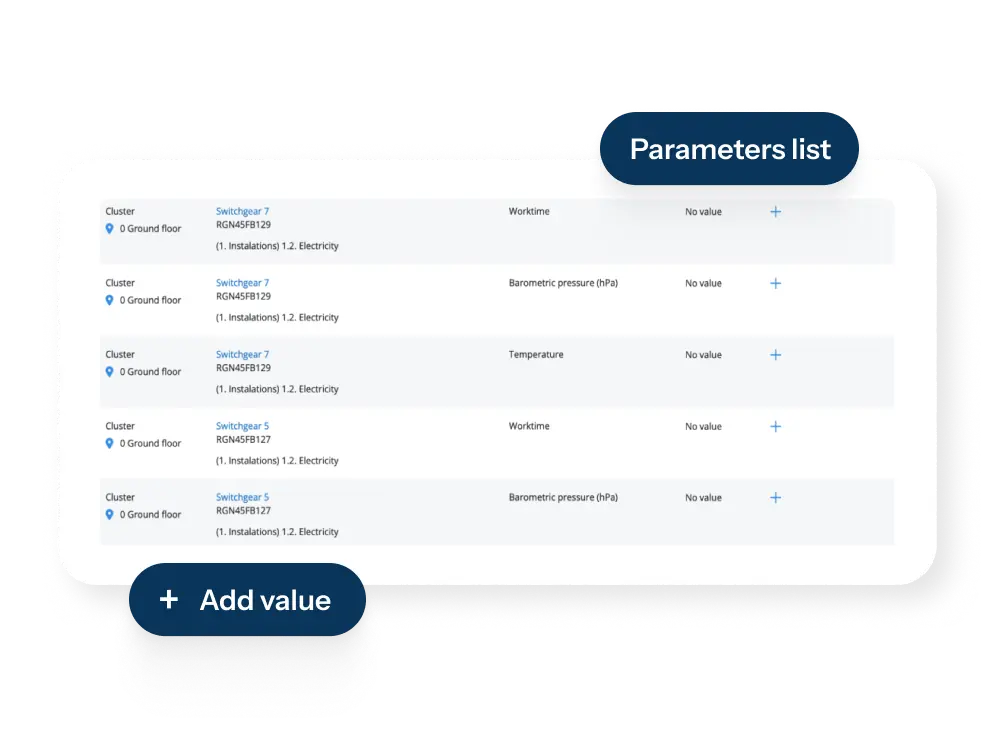
All too often, this information lives in spreadsheets, meaning warranties lapse unnoticed and repair-or-replace decisions become guesswork. Tagging assets with NFC tags, attaching photos, and recording history and performance metrics against each helps keep accurate records, whilst IoT sensors can add live condition data to support predictive maintenance.
Fire Safety and Statutory Inspections
The Regulatory Reform (Fire Safety) Order 2005 is the primary piece of legislation governing fire safety in buildings in England and Wales, and makes the responsible person accountable for fire safety, whilst HTM 05-01 sets out how healthcare premises should manage it. Alongside fire alarms, emergency lighting and fire doors, estates teams must run recurring statutory checks on lifts, gas and electrical safety.
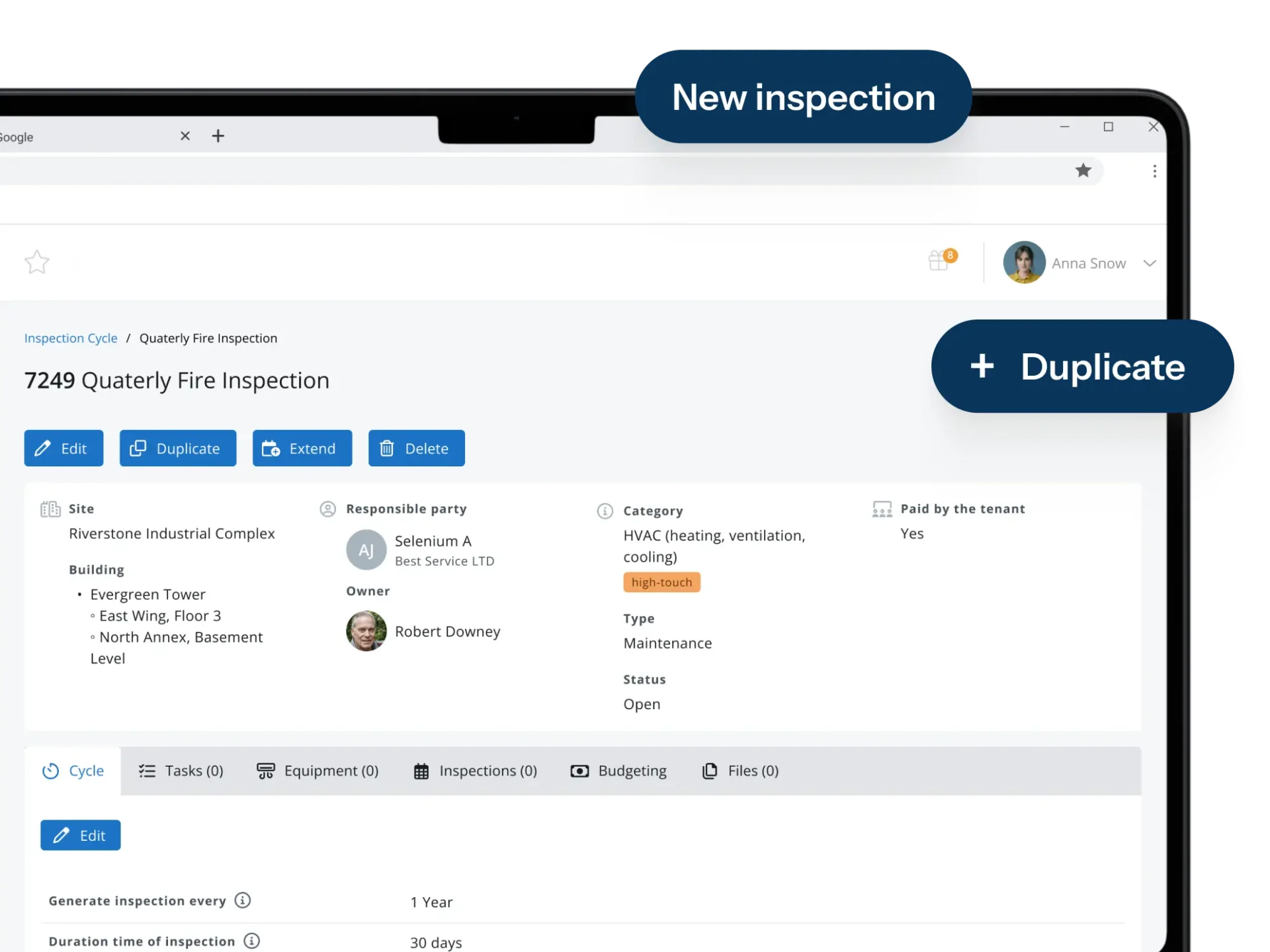
Carrying out the checks is only part of the puzzle, as estates and facilities teams must also ensure all checks are evidenced. A missed or undocumented check is a compliance risk, even if the work was done, and can lead to enforcement action and reputational damage. Scheduled checks with alerts and escalations when a check fails or is missed help teams reduce risk and close gaps before an inspection does.
Water Safety and Legionella Control
With many patients more vulnerable to infection than in other settings, water safety matters more in hospitals. HTM 04-01, the HSE's ACoP L8 and HSG274 lay the framework for water safety and Legionella control, with HSE guidance stating that hot water should be stored at 60°C or higher, cold water should be kept below 20°C, and infrequently used outlets should be flushed at least weekly.
Paper logbooks make it difficult to spot trends or prove every outlet has been checked. SINGU Healthcare, for example, uses Bluetooth temperature probes with built-in L8 and HSG274 limits, feeding digital logbooks, dashboards and trend analysis.
Space Planning
Accurate space records show how every room is used, helping estates teams adapt areas for new services or equipment and report space accurately. Linking space and CAD floor plans to asset and maintenance data gives one view of the estate.
Soft FM in Hospitals
Soft FM covers the support services patients and staff see every day, such as cleaning, catering and portering. Here's a detailed rundown of each, and how digital tools can help:
Cleaning and Infection Prevention
In clinical environments, cleaning is one of the main defences in infection prevention and control (IPC). In England, the National Standards of Healthcare Cleanliness apply to all aspects of cleaning in the NHS, with areas all given one of six functional risk categories that sets how often they ought to be cleaned and audited, with patient-facing areas needing to display a star rating from 1 to 5.
Paper audits are slow to collate, easy to lose, and prone to errors. Digital tools on the other hand can run ward and room level audits against the national standards, can work offline on mobile devices, and can trigger rectifications to ward or estates teams linked to action plans.
Patient Catering
Good food supports recovery, and food safety is a legal duty. The National Standards for Healthcare Food and Drink set eight mandatory standards, including a nominated food safety specialist.
The standards also assert that every hospital must implement a digital meal ordering system that links to patient identification and dietary needs.
SINGU Healthcare, for example, supports digital bedside ordering with picture menus on any mobile device. Allergen and nutrition data, including nutritional analysis that can pass to the electronic patient record (EPR), sits alongside production and stock management.
Portering and Rapid Response Tasks
Porters move patients, equipment, samples and supplies around the hospital, with slow responses quickly affecting patient flow, discharges and theatre lists.
NHS England’s new National Standards for Healthcare Portering Services, published July 2026, set 22 standards covering everything from patient transfers and medical gases to specimens and waste. Trusts are expected to track key performance indicators such as response times, use digital tools for real-time task tracking, and report compliance annually through the Premises Assurance Model.
Waste Management and Security
Hospitals produce clinical and general waste streams that must be segregated, stored and disposed of safely, in line with HTM 07-01 on the safe management of healthcare waste. Tracking volumes and costs by stream helps teams cut costs and report accurately.
Hospital security protects patients, staff and visitors around the clock, from access control and CCTV to responding to incidents and keeping restricted areas, such as wards and pharmacies, secure.
Compliance and Regulation in UK Healthcare Facilities
Regulatory compliance in healthcare organisations means working within a wide set of laws, guidance and assurance frameworks, and being able to accurately demonstrate compliance with each. The table below covers the main ones in England:
| Regulation or standard | What it covers | Who checks it |
|---|---|---|
| Health and Social Care Act 2008 | Safe, clean, suitable and properly maintained premises and equipment (Regulation 15) | CQC |
| Health and Safety at Work etc. Act 1974 | Workplace safety for staff, patients and visitors, including PUWER and LOLER | HSE |
| HTM and HBN guidance | Engineering standards (HTMs) and design guidance for healthcare buildings (HBNs) | Trusts, through internal assurance and PAM |
| ACoP L8 and HSG274 | Legionella risk assessment and control in water systems | HSE |
| Regulatory Reform (Fire Safety) Order 2005 | Fire risk assessment, fire precautions and emergency planning | Local fire and rescue authority |
| National Standards of Healthcare Cleanliness | Risk-based cleaning, audits and star ratings | Trust boards, with CQC oversight |
| National Standards for Healthcare Food and Drink | Food safety, nutrition, digital meal ordering and food waste | NHS England, through ERIC and PAM |
| National Standards for Healthcare Portering Services | 22 standards for portering, including patient transfers, response times and KPIs | Trust boards, reported through PAM |
| Premises Assurance Model (PAM) | Annual self-assessment of estates and facilities safety, patient experience and finance | Trust board, updated annually |
| ERIC | Annual return on estates costs, facilities services and backlog maintenance | NHS England |
Scotland, Wales and Northern Ireland have their own equivalents, including Healthcare Improvement Scotland, Healthcare Inspectorate Wales and the RQIA, and Scotland and Wales use their own versions of the HTMs.
When compliance data is already in one place, audit readiness becomes the norm rather than a last-minute task. Digital audit trails keep accurate records of who did what and when, alongside incident reports, while dashboards show overdue checks, failed audits and open actions across every site. By embedding compliance in daily operations, maintaining and proving compliance becomes easier, and teams can fix gaps before an inspector finds them.
Sustainability, Energy and Net Zero in Healthcare Estates
The NHS in England has committed to reach net zero by 2040 for the emissions it controls directly, with an ambition to cut them by 80% between 2028 and 2032. For the wider emissions it can influence, the target is net zero by 2045. This is important for healthcare estates and facilities teams, with the Greener NHS programme naming the estate and facilities as a critical area for carbon reduction.
As hospitals run around the clock, energy use from heating, ventilation, lighting and ageing plant is high. Old gas boilers, inefficient air handling units and poorly controlled systems all add to estate emissions and offer some of the clearest opportunities for savings.
Good maintenance and asset data help estates teams plan upgrades. Knowing the age, condition and performance of each boiler or air handling unit shows which replacements will save the most energy, and helps prioritise the backlog work with the biggest impact on emissions.
Key Challenges for Healthcare Facilities Managers
Backlog maintenance and ageing estates. Much of the NHS estate was built decades ago, and the cost to clear the backlog in England rose by 15.7% in 2024/25, with high-risk backlog up 27.8%. Estates teams face the difficult challenge of deciding which risks to fix first with limited money.
Tight budgets and capital planning. With rising patient demand and tight budgets, capital funding rarely covers every need, meaning estates teams have to build strong cases for investment. Without reliable asset condition and cost data, those cases become much harder to make.
Audit evidence spread across paper and separate systems. Certificates, logbooks, and audit results often live in different places. Pulling them together before an inspection takes days, leaves gaps, and creates errors.
Staffing and workforce pressure. Recruiting and keeping skilled engineers, domestic staff and porters is challenging, so teams need to make the most of the time they have, with less admin and fewer manual records.
What to Look for in Healthcare Facilities Management Software
We've compiled a handy checklist below to help you compare healthcare facilities management software and other digital platforms. A good system should have:
- Hard and soft FM in one system. Maintenance, compliance, cleaning, catering and portering should share one platform and one set of data, giving estates teams a single source of truth.
- Compliance tracking and audit trails. Every inspection, audit and fix should be time-stamped and easy to export against the relevant compliance standards.
- Mobile access. Technicians and ward staff should be able to log jobs, complete checks, and run audits on mobile devices, including offline.
- Multi-site reporting and dashboards. Leaders and decision-makers need one view across all hospitals, community sites, and services.
- Integrations. Check links to existing systems, such as finance, BI tools and the EPR.
- NHS experience. Ask for healthcare references and experience with NHS standards.
- Implementation and support. Look at rollout approach, training and ongoing support, not just features.
For a wider comparison, see our facility management software guide.
How SINGU Healthcare Supports Hospital Facilities Teams
SINGU Healthcare brings hard FM, soft FM, space and compliance into one platform, so estates and facilities teams work from one system instead of several, improving operational efficiency across healthcare operations. Already used by over 200 NHS trusts, SINGU Healthcare covers:
- Assets and maintenance: digital work orders, SLA monitoring, automated PPM scheduling, checklists and inspections on a mobile app.
- Space and CAD data: accurate room and floor plan records linked to assets and maintenance.
- Estates compliance: water safety with Bluetooth temperature probes and digital logbooks, fire safety, emergency lighting, gas, electrical and lift checks, with alerts when checks are missed.
- Soft FM: cleaning audits against the national standards, bedside patient catering, portering and helpdesk tasks with automated allocation, and waste tracking.
One platform for hard FM, soft FM and compliance.
See how SINGU Healthcare supports NHS estates and facilities teams.
Case Study: Birmingham Community Healthcare NHS Foundation Trust
Birmingham Community Healthcare NHS Foundation Trust (BCHC) is one of the UK's largest community healthcare providers. BCHC implemented SINGU Healthcare to modernise the way its estates and facilities teams operate.
The challenge
When its existing CAFM contract came up for renewal, BCHC saw a chance to change how its estates and facilities teams worked, not just swap software. The trust wanted to replace legacy processes, strengthen compliance and governance, improve asset data and reporting, and cut manual administration, all without disrupting clinical services.
The solution
BCHC brought its helpdesk, reactive maintenance, planned preventive maintenance and asset register into SINGU Healthcare. Tickets are created and allocated automatically, PPM and statutory compliance are tracked in one place, and role-based permissions and digital audit trails support governance. Embedded Power BI dashboards give leaders a live view of estate performance, while capital planning and ESG reporting support longer-term decisions.
The results our clients see
BCHC has already seen clear gains since moving to SINGU Healthcare. With the rollout ongoing, these results are expected to grow.

25–50%
Higher PPM compliance

Up to 40%
Faster reactive maintenance resolution

Up to 50%
Fewer service-related complaints

85%
Less manual administration

Up to 33%
Lower maintenance costs

500%
Projected return on investment over three years
"We weren't simply looking to replace our CAFM system. This was a strategic investment aligned with our future operating model and the ambitions of the NHS 10-Year Plan. We wanted a platform that would simplify estates management, improve the quality of our data and enable better decision-making across the Trust."
Phil Budd, Head of Estates, Birmingham Community Healthcare NHS Foundation Trust
The rollout is ongoing, so the trust expects these benefits to grow as more of the estate moves onto the platform.
Frequently Asked Questions About Healthcare Facilities Management
What Does Healthcare Facilities Management Include?
Healthcare facilities management includes maintaining buildings, infrastructure and engineering systems, delivering support services such as cleaning, catering and portering, meeting healthcare regulations, and planning the long-term estate. Its goal is a safe, clean and reliable environment for patients and staff.
What's the Difference Between Hard FM and Soft FM in Healthcare?
Hard FM covers the management and maintenance of the physical building and its engineering systems, such as HVAC, water, electrics, lifts and medical gases. Soft FM covers the people-based services, such as cleaning, catering, portering, waste and security. Both affect patient safety in a hospital.
What's the Difference Between Estates and Facilities in the NHS?
In the NHS, estates usually refers to the buildings, land and engineering systems, including maintenance and capital projects. Facilities refers to the support services that run inside them, such as cleaning, catering and portering. Most trusts manage both under one director of estates and facilities.
What Regulations Apply to Healthcare Facilities in the UK?
In England, the main regulations are the Health and Social Care Act 2008, the Health and Safety at Work etc. Act 1974, the Regulatory Reform (Fire Safety) Order 2005, ACoP L8 and HSG274, and HTM guidance. NHS trusts also follow the national cleaning, food, and portering standards, and complete PAM and ERIC each year.
What Software Is Used in Healthcare Facilities Management?
Healthcare facilities management software, often called CAFM or CMMS, manages maintenance, assets, compliance and support services. Platforms such as SINGU Healthcare combine hard FM, soft FM, space and compliance in one system.
What Does an NHS Estates and Facilities Team Do?
An NHS estates and facilities team keeps the trust's buildings safe, compliant and working. It manages maintenance, statutory inspections, capital projects and energy, and runs services such as cleaning, catering, portering and waste.
Conclusion
Healthcare facilities management covers the buildings, engineering systems and support services that keep hospitals running, and the compliance that proves they are safe. Because hospitals run 24/7 and failures affect patients directly, hard FM, soft FM and compliance matter more in the healthcare industry than in most other sectors. Bringing them into one platform gives estates and facilities teams one source of truth, less admin, safer environments and inspection-ready evidence across every site.